Civilization Chronicles
Five AI tools worth remembering: interactive slides and custom WordPress blocks
Remember Motiff, Faces, Firebase Studio, Telex, and new.email through their original design workflows, interactive presentations, app prototypes, WordPress blocks, and email templates.
A slide you could interact with. A recipe widget that scaled its ingredients and threw confetti when you finished. An email template you could generate, revise, and send to your own inbox.
Motiff, Faces, Firebase Studio, Telex, and new.email each connected an idea to something specific. Their original releases and demonstrations offer a useful way to remember them: through the work they let people do, and the small interactions that made them distinctive.
Motiff / 妙多: AI assistance for repetitive UI design work
Designing a set of cards or button variants involves plenty of copying, changing content, and arranging elements. Motiff put AI assistance into those editing tasks.
Its 2024 release described AI Reduplication for repeated copy–paste–modify work, AI Layout for moving between freeform and structured layouts, and AI Design System for creating and maintaining design systems.
These features addressed work inside an editable design canvas. The interesting promise was continuity: AI could help organize the repeated parts while designers kept working on the same interface, adjusting and collaborating. Motiff was also known through its Chinese-language service, 妙多 (Miaoduo); the two belong to one product family.
Motiff archive · Original Motiff release
Faces: interactive presentations you could control from your phone
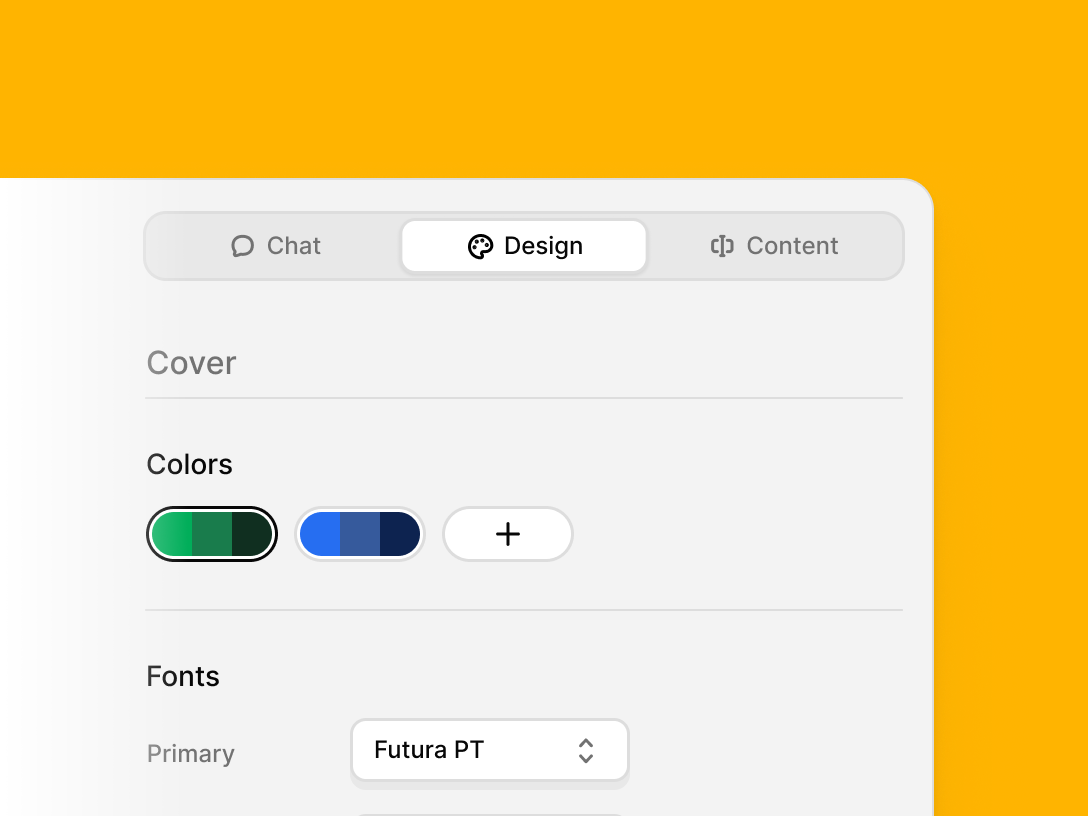
Faces treated a slide as a place where software could run. Its Faces II announcement described embedded forms, interactive maps, live charts, and product demonstrations. Existing PPT and PDF decks could be imported, either preserved or redesigned along the way.
A particularly thoughtful detail was the phone remote. Scanning a QR code gave the presenter navigation controls and a trackpad for moving a pointer or reaching interactive and hoverable elements inside the slide.
That connected the editing experience to the presentation itself. Interactive content had a way to be operated while someone stood in front of the audience.
Faces archive · Original Faces II announcement
Firebase Studio: a working app beside the conversation changing it
Firebase Studio’s April 2025 introduction joined natural-language prototyping to a code workspace. Text, images, or drawings could become a Next.js app; a conversation could refine it, and a CodeOSS workspace provided access to source and a terminal.
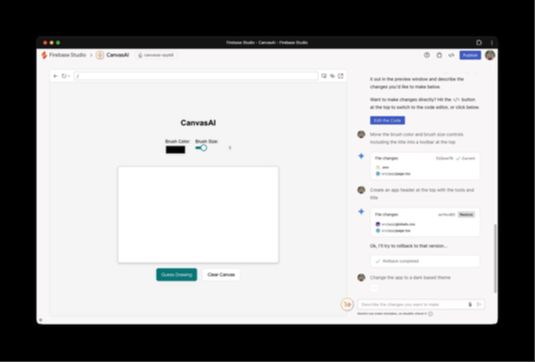
The official Canvas AI demonstration made this tangible. A drawing app with brush controls and an AI guessing button appeared beside the chat used to change its toolbar and theme. The canvas was the generated app, not a built-in drawing feature of the editor.
Mobile previews, shared workspaces, and App Hosting publishing extended that path. The product debuted as a preview, initially starting app prototyping with Next.js.
Firebase Studio archive · Original introduction
Telex: a WordPress recipe block with a little celebration
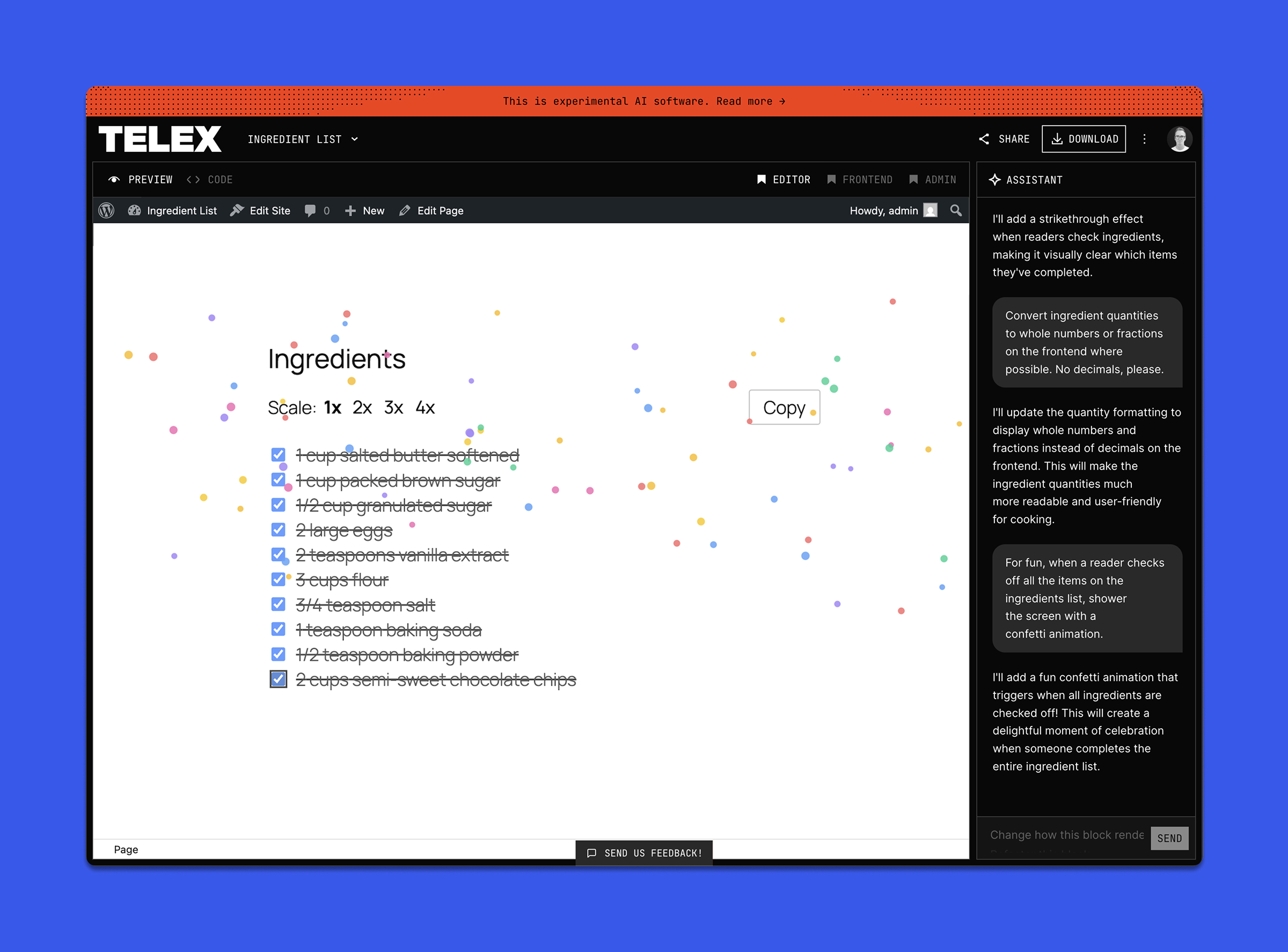
WordPress.com author Nick Diego used Telex for a wonderfully concrete task: an ingredient list whose quantities could scale, whose items could be checked off, and whose contents could be copied.
He described the block, previewed it in WordPress Playground, and refined it with follow-up requests. Checked ingredients gained strikethroughs, quantities gained fraction formatting, and finishing the checklist triggered confetti. Code remained editable, and the block could be downloaded as a plugin ZIP.
A small feature, tailored to one site, had become something people could actually use. The demonstration also retained the experimental nature of Telex: results could vary, and more complex blocks could need further development.
Telex archive · Original ingredient-list demonstration
new.email: from an AI email template to a real test message
new.email connected natural-language template creation with a practical next step: sending a test email to your own inbox through Resend.
The workspace combined iterative prompting, a floating preview, and a switch between code and preview. Finished templates could be copied or downloaded as React components, HTML, or plain text.
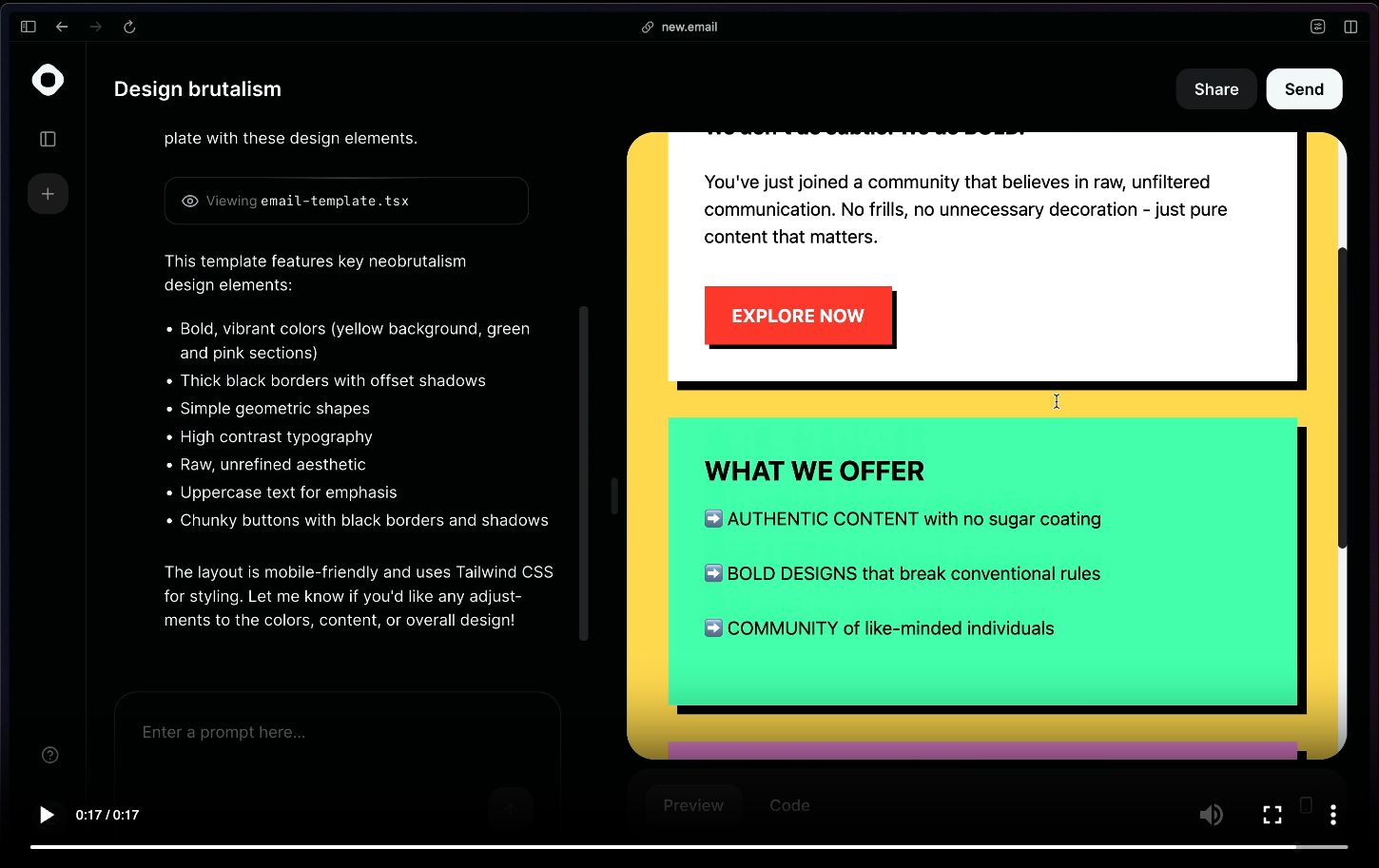
In the launch video, a request for a neobrutalist email became a template with a yellow background, heavy black borders, and green content blocks. The style moved from a description into a visible email. Preview, test sending, and code export gave that generated design a route into an existing email workflow. React Email supplied its component foundation.
new.email archive · Original public launch
Where they stand now
As of the research date, Motiff/Miaoduo’s editing services have ended, and Telex and new.email have been confirmed retired. For Telex and new.email, the archive date of 28 October 2026 is an observation proxy; the actual final service days are unknown. Faces is scheduled to end on 31 December 2026, and Firebase Studio’s development environment on 22 March 2027. Both retain their planned status. Each archive links the complete timeline, scope, and evidence.
If you used one of these tools, the corresponding archive is a place to leave a specific memory: a design, a presentation, a small block, or an email you finally got right.
Sources and method: This retrospective uses original product announcements and demonstrations, with image credits beside the figures. Official demonstrations are not presented as our hands-on tests, and no user memories have been invented. Product status and its supporting evidence remain in the linked archives.