Civilization Chronicles
Four AI interfaces that worked with context
Remember Cortana, Clockwise, Google Whisk and Coqui Studio through reminders, flexible meetings, image references and voice projects.
A reminder could wait until you reached a supermarket. A meeting could move to make room for a longer stretch of work. A picture could become an ingredient for another picture.
Cortana, Clockwise, Google Whisk and Coqui Studio worked with different kinds of context: a place, a calendar, visual references and a voice project. Their controls tell a more specific story than the broad label “AI assistant” suggests.
A reminder waiting for the right moment
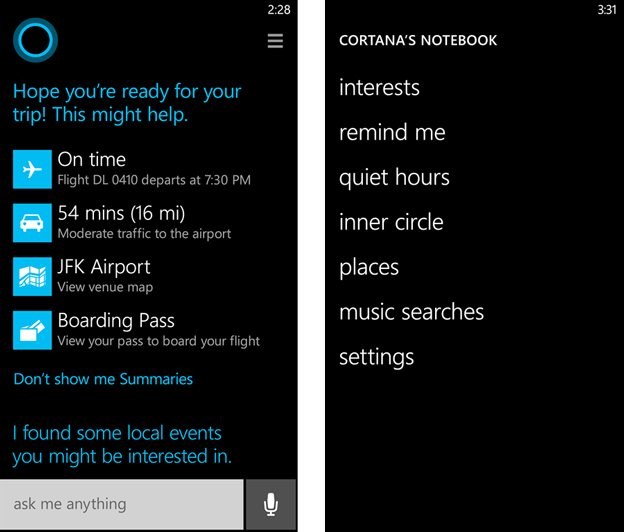
A reminder did not always need an alarm clock. On Windows Phone 8.1, Cortana could attach a reminder to a place or a person. Microsoft’s 2014 guide gave a simple example: ask for a reminder to buy eggs at a supermarket, then choose “Any” from the nearby stores. The reminder could appear at the next supermarket rather than at a fixed time.
Cortana’s Notebook kept reminders in a place the user could revisit. Its history allowed a completed reminder to be reactivated; a pinned tile offered a quieter way to add one without speaking. Cortana was also known as 微软小娜 in Chinese. Microsoft later retired its different Cortana experiences in stages, so there is no single verified shutdown day for every interface.
Cortana archive · Microsoft’s reminder guide · Microsoft’s end-of-support notice
Clockwise: making a larger space on the calendar
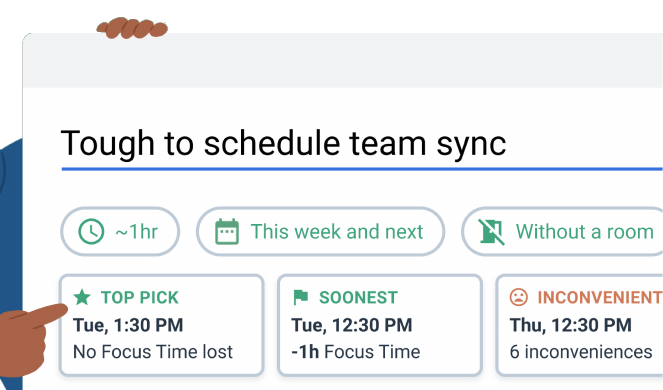
Clockwise treated a calendar as a set of adjustable commitments rather than a row of empty slots. In its quick-start guide, a recurring internal meeting could be marked flexible within a day or a week. Clockwise could then move eligible meetings and protect longer blocks of Focus Time as schedules changed.
Its guide illustrated the trade-off in a scheduling suggestion: one proposed time lost no Focus Time, while an earlier one cost an hour. That made the effect of a meeting visible before choosing it. The flexibility applied to meetings marked as flexible, not every event on a calendar.
Clockwise ended its scheduling service on March 27, 2026. Its archive separates the service from the later work of its team and from other scheduling products.
Clockwise archive · Clockwise quick-start guide · Operator’s closure notice
Whisk: three pictures as ingredients
Google Labs’ Whisk gave image generation a different starting point: an image for a subject, another for a scene, and a third for a style. Google’s examples combined the ingredients into new pictures, including a walrus in a flower field and an image of a doughnut rendered as an enamel pin.
The original 2024 announcement explained the translation underneath. Gemini described the images and Imagen generated the result from those descriptions. The output could depart from important details of the source images; Whisk let people view and edit the underlying prompts when it did. These are Google’s examples and descriptions, not results from a We Used This test.
The standalone Whisk experience ended on April 30, 2026, as its capabilities moved to Flow. The archive concerns Whisk itself, not the continued availability of Flow or the underlying models.

Whisk archive · Google’s original Whisk introduction · Google’s transition notice
Coqui Studio: creating a voice as part of a project
Coqui Studio brought several steps of voice work into a hosted studio. Coqui’s own introduction described creating voices, cloning a voice, directing performances and organizing projects. Its retained technical documentation later listed voice generation from a prompt and voice fusion among the Studio features.
That combination matters for understanding what the hosted product was: a place to make and organize voice work, not just the separate open-source text-to-speech library. The sources describe available features; they do not establish a particular recording workflow or a performance we personally made.
Coqui Studio was discontinued. An original project commit dated December 11, 2023 confirms the integration’s removal and is a dated confirmation, not proof of the exact last day the web service could be accessed. The retained toolkit and models are separate from the hosted Studio.
Coqui Studio archive · Coqui’s product introduction · Coqui documentation · Original project commit
What the controls left behind
The four products did not promise the same thing. Each made a different piece of context visible and editable: a reminder in a notebook, a flexible meeting, the ingredients behind an image, or voices organized around a project. Their archives preserve the dates and sources; these interactions help preserve what the products were for.