Civilization Chronicles
Four AI music tools and the work they made visible
Remember AWS DeepComposer, Samplab, Beatoven.ai and Aux through melodies, editable audio, mood timelines and generated samples.
A few notes on a grid. A chord inside a recorded loop. A timeline that moves from one mood to another. A sample described in a sentence.
AWS DeepComposer, Samplab, Beatoven.ai and Aux placed AI at different moments in music-making. They are worth remembering for those interfaces: what a person could put in, change and listen to next.
AWS DeepComposer: a melody as a starting point
A musician could play a short melody on a keyboard, draw one in the console, import MIDI, or choose an example. DeepComposer then offered several ways to work with that input. AWS described its generative models as a way for developers to learn machine learning through music, rather than as an automatic replacement for a musician.
In one later Music Studio demonstration, the user chose a Transformer model to extend an input melody by up to 20 seconds, then played the result in the console. The editor also exposed notes on a grid, where their pitch and length could be changed. This is AWS’s documented workflow and example, not a piece composed by our team.
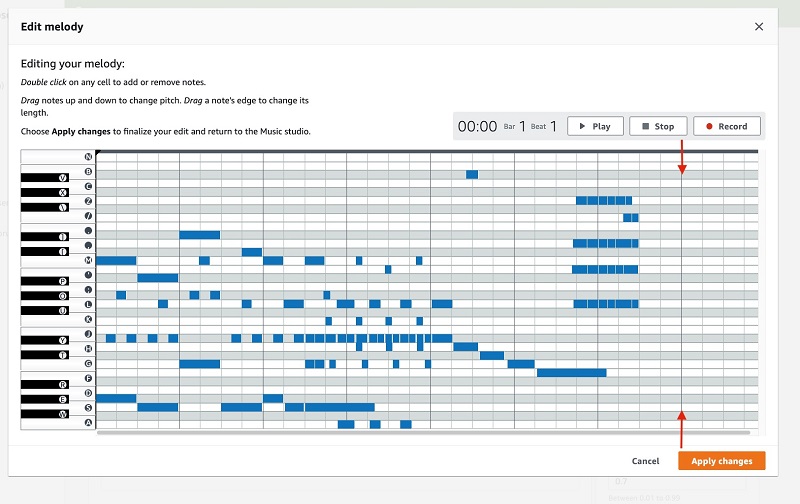
AWS lists DeepComposer as fully shut down on September 17, 2025. That covers the cloud service, not a claim that a physical keyboard can no longer work as a generic input device.
AWS DeepComposer archive · AWS Music Studio demonstration · AWS shutdown registry
Samplab: open a chord and move a note
Samplab approached an existing recording from the inside. Its creators described an editor that could detect a chord progression in loaded audio and let a musician edit it. Earlier demonstrations showed individual notes in polyphonic samples as editable elements, including their pitch and timing.
That distinction changes the task. A sample is usually something a producer slices, stretches or layers. Samplab presented some of the notes within it as objects to work on, making a different chord or melody possible without starting from an empty instrument track. The description comes from the makers’ announcement and contemporaneous demonstrations; it does not imply every recording could be separated perfectly.
The former new-audio editing workflow has ended. The archive distinguishes the announced September 17, 2026 cutoff proxy from a measured last session, and records limited legacy and offline tools separately.
Samplab archive · Samplab’s chord-editing announcement · 2021 product coverage
Beatoven.ai: give different moments different moods
Beatoven.ai started with the needs of a video or podcast: a duration, a genre, a tempo and a mood. A 2022 demonstration paper by its team described a timeline divided into sections, each with its own mood. An uploaded video or podcast could play alongside the generated music so the creator could make decisions against the material.
The interesting control was selective recomposition. A creator could lock sections they liked, then ask the system to generate alternatives for the remaining sections. The paper also describes changing a section’s instruments and placing volume transitions on the timeline. Those details made the music a sequence of editable decisions rather than a single prompt and download.
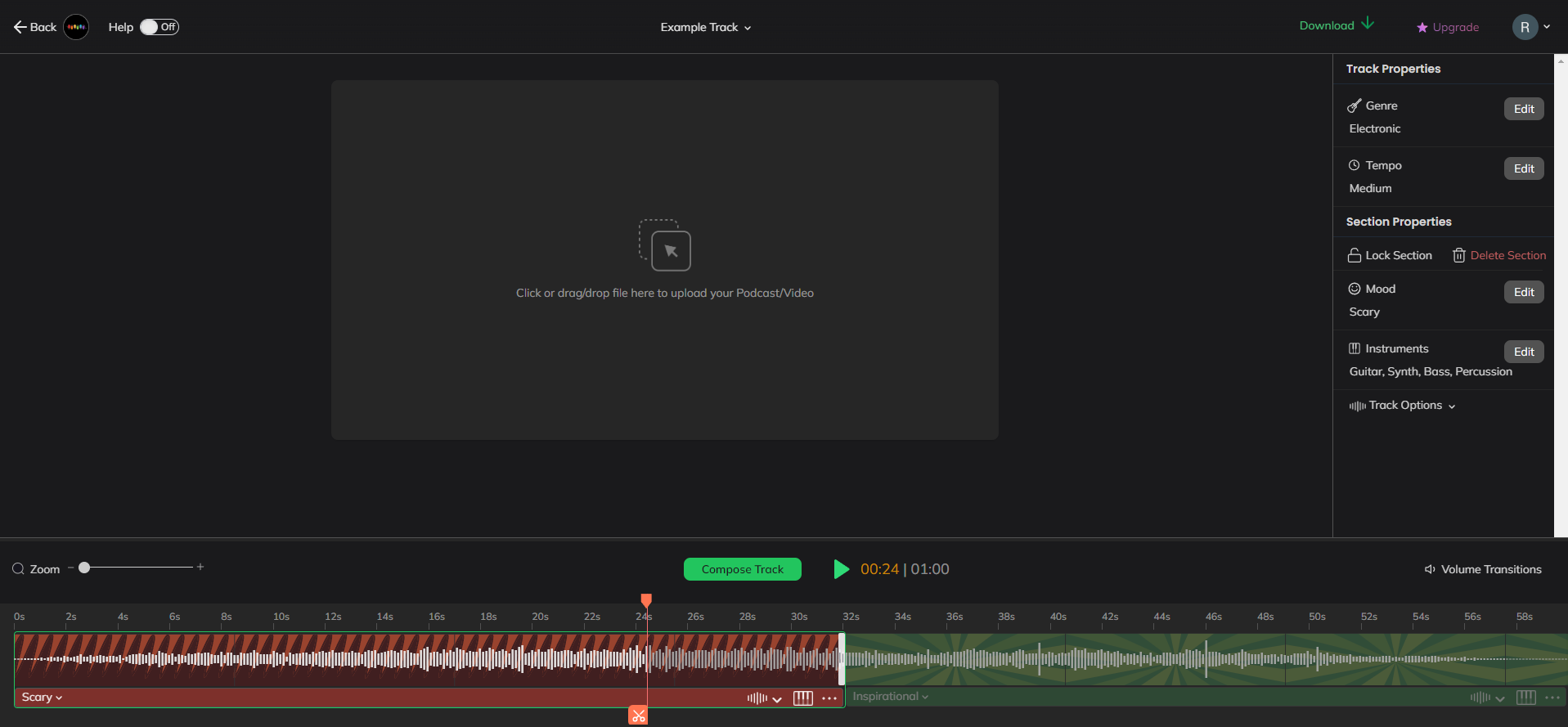
The founder said Beatoven.ai’s consumer service ended in August 2026; the exact day is not established. The archive separates the former consumer app from the company’s continuing business-to-business intellectual property.
Beatoven.ai archive · 2022 product demonstration paper · Founder’s closure announcement
Aux: a sample generated inside a project workspace
Aux began as a collaboration workspace for music projects. In 2024, the team introduced Aux Sounds and LoopLM: a producer could enter a text prompt, preview a generated sample or loop, and then download it, store it in Aux Hub or drag it into music-production software.
The step between the description and the rest of a project was the point. The result was a short sound to audition alongside other material, not a claim that the system had completed a song. Aux’s release also described its own approach to licensing training samples; that is a company statement, not an independent audit of rights or training data.
Aux later closed. The founder’s April 14, 2026 retrospective is the archive’s dated closure proxy, not an established final-access day. Other products mentioned in that retrospective are separate.
Aux archive · Aux’s 2024 announcement · Founder’s retrospective
Four different starting points
These were not four versions of the same instrument. One extended a melody for learning; one opened up existing audio; one arranged moods against a timeline; one supplied short sounds for a project. Their controls show how differently a product can place a person inside the process of making music.