Civilization Chronicles
A photo library, a pocket CFO, and a travel guide
Remember Everpix’s moments and highlights, Cinch Financial’s Snapshot and advice, and Yahoo Radar’s email-powered trips through historical sources and illustrations.
A folder of photographs, a financial dashboard, an inbox of reservation receipts: three familiar collections with very different things to tell us. Everpix, Cinch Financial and Yahoo Radar tried to turn those collections into something a person could use at a glance.
This selection returns to a founder demonstration, a former designer’s account and Yahoo’s original introduction. The illustrations pair an original explanation of Everpix’s organizing ideas with preserved Cinch and Radar product artwork.
Everpix: remembering the moment before finding the file
Everpix treated a photo library as material for rediscovery. In a March 2013 founder demonstration reported by Digital Trends, image analysis grouped photographs into moments and selected a highlight to represent each collection. A remembered occasion could become the starting point for browsing, rather than a long contact sheet.
Its Explore feature offered themes such as people, food and nature. The system looked at image contents as well as metadata; the report also described incorrect categorization and a way to send feedback. The ability to correct a category mattered alongside the automatic sorting.
The library offered a route back to a memory before its owner supplied every label.
Contemporary founder demonstration.
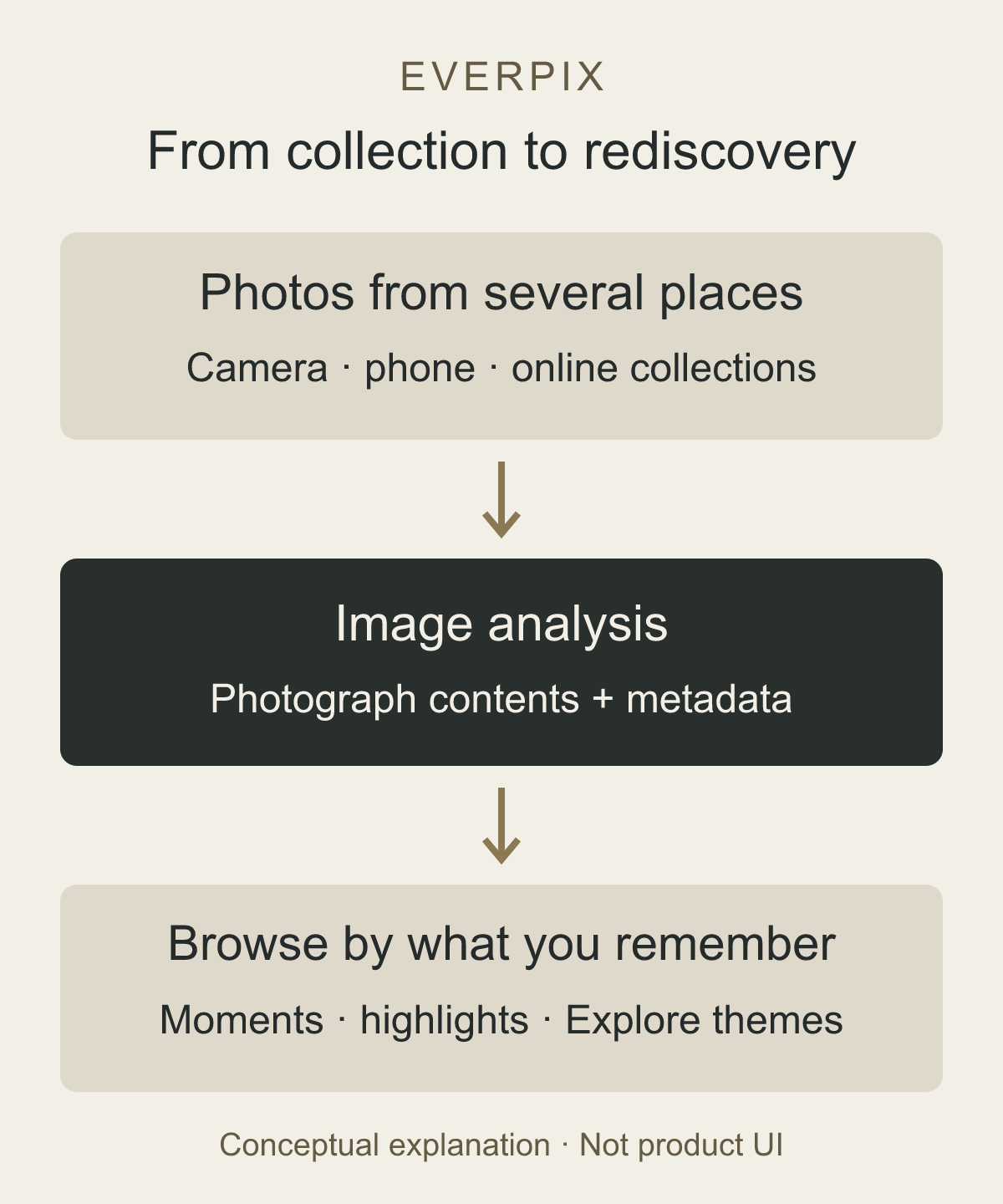
The Everpix archive preserves the team’s confirmed December 2013 ending. Its displayed December 15 is an inferred original planned-cutoff marker, not an independently established final day.
Cinch Financial: giving a number a place to go
Cinch Financial’s pocket-CFO idea had a visible home in Snapshot: cash, debt, money moving in and out, and protection. Former team designer Cass Hebert’s case study shows these views alongside prioritized advice called moves.
The interesting part was the passage from an overview to an action. A balance could sit beside an explanation; an insurance recommendation could become a sequence with questions and a comparison. The financial overview and the recommended next step lived in the same service.
Hebert separates released changes from unfinished savings-goal designs. We do not count the latter as an available feature.
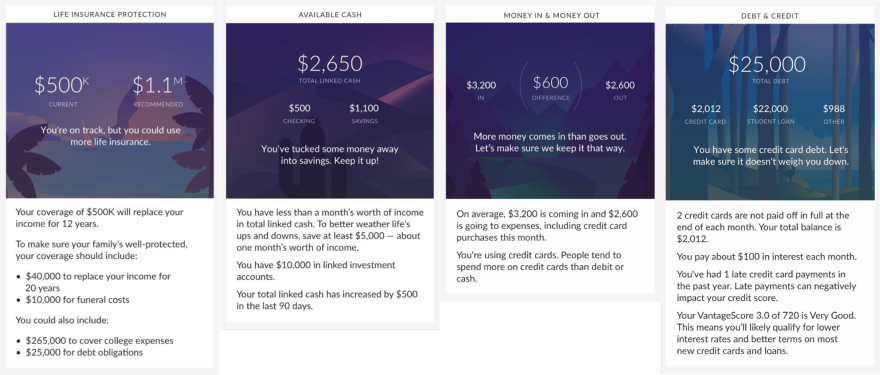
The Cinch Financial archive records closure in 2018. Its displayed March 16, 2025 date identifies an archived postmortem observation, not a 2025 shutdown.
Yahoo Radar: letting the trip emerge from the inbox
Yahoo’s June 2016 introduction gave Radar a practical entrance: sign in with Yahoo Mail, then use flight, hotel and rental-car confirmations to organize a trip. Linked mailboxes could supply those receipts too. The iPhone app combined travel details with suggestions for places to eat and visit in U.S. cities.
A bucket list held things worth remembering. Preferences and travel month shaped suggestions, including restaurant dishes. The preserved launch animation puts a flight and a hotel into a compact travel view. Those cards show how reservation details could sit together while planning the rest of a visit.
The inbox supplied context, and the guide offered somewhere to take it. Planning could begin with a trip already represented in ordinary email.
Yahoo’s original product introduction, preserved in June 2016.
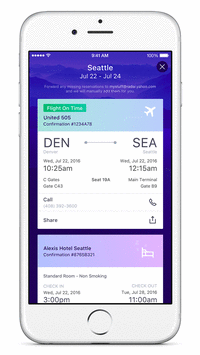
The Yahoo Radar archive records the service’s December 2016 ending. December 19 is the dated observation of its discontinued-app notice, not a verified exact cutoff day. Yahoo Mail and Yahoo’s other services are separate.
What remains visible
These products made different things easy to notice: a photograph representing a moment, a financial summary pointing toward a next step, receipts assembled into a trip. Their surviving explanations and images preserve the shape of those interactions. The archive pages carry the more detailed dates and evidence; the product stories are the reason to follow those links.
Researched November 16, 2026. The products and illustrations are historical; dates and service scopes are detailed in their linked archives.