Civilization Chronicles
A manuscript, a chat stream, and an Expo conversation
Prism’s manuscript context, Watson Workspace’s conversation Moments, and EXPO Translation’s venue vocabulary: three AI workflows remembered through original sources and diagrams.
A paragraph surrounded by equations and references. A question buried in a team conversation. A place name that makes sense inside one large exhibition. Prism, IBM Watson Workspace and EXPO Translation brought AI into these particular settings, with different things already on the screen.
These are three product histories from different years. Prism has a future retirement plan; the other two services have already ended. Their original descriptions and the linked archives keep those circumstances separate.
Prism: the manuscript around the question
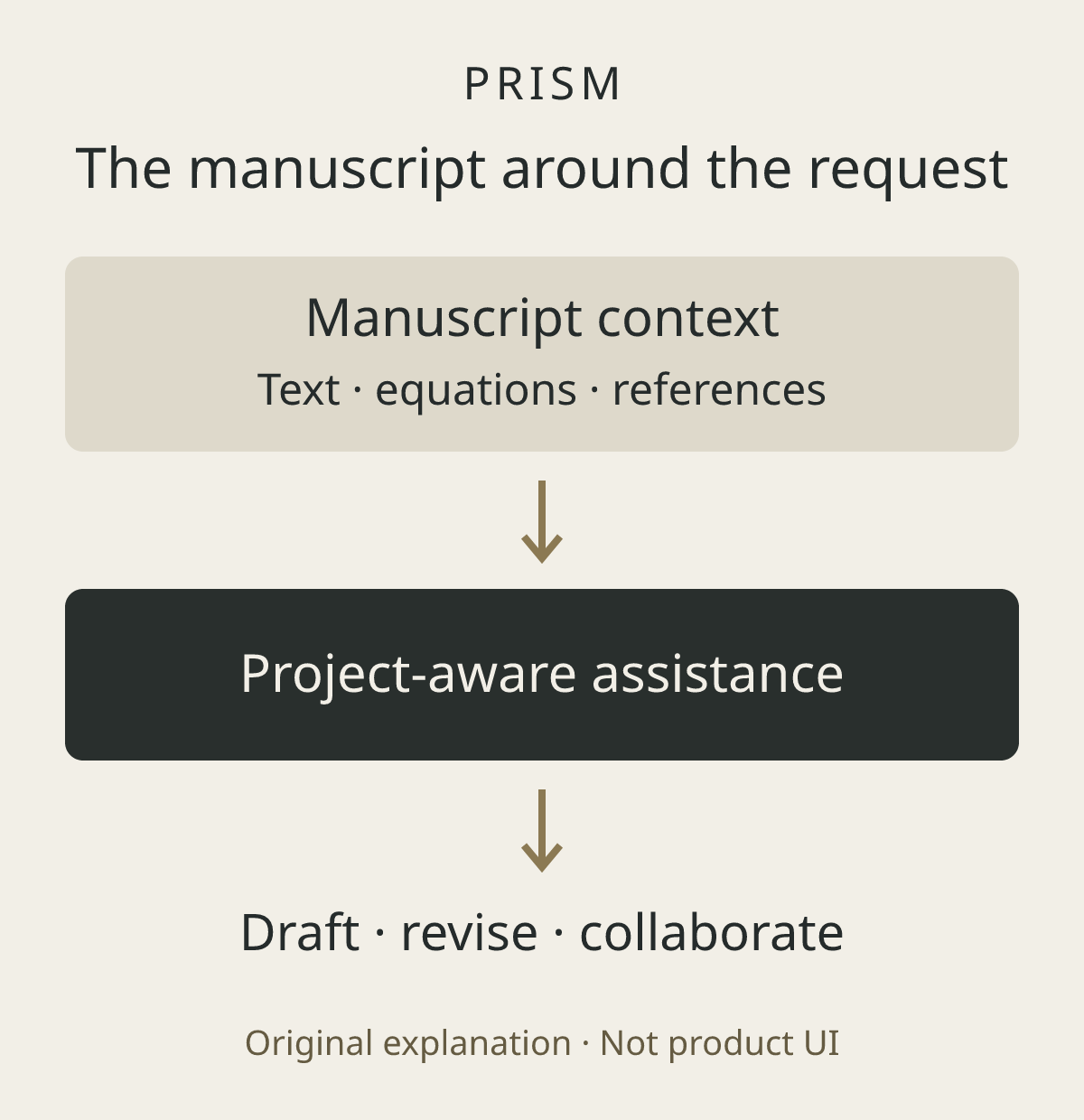
OpenAI introduced Prism on January 27, 2026 as a cloud-based, LaTeX-native scientific-writing workspace. Assistance could use the paper’s structure, equations, references and surrounding text as context.
The introduction described drafting and revising inside the manuscript, incorporating relevant literature, and converting whiteboard equations into LaTeX. Co-authors could share a project, with edits and comments reflected in real time. The distinctive interaction was a request made alongside the scientific document, followed by changes in that document.
These were intended product functions, not findings from our own accuracy or collaboration test.
OpenAI’s original introduction and current update.
The current notice schedules closure for January 1, 2027. The Prism archive keeps that future plan distinct from completed closure; the notice’s publication day and cutoff hour/time zone remain unknown.
Watson Workspace: a conversation could become a Moment
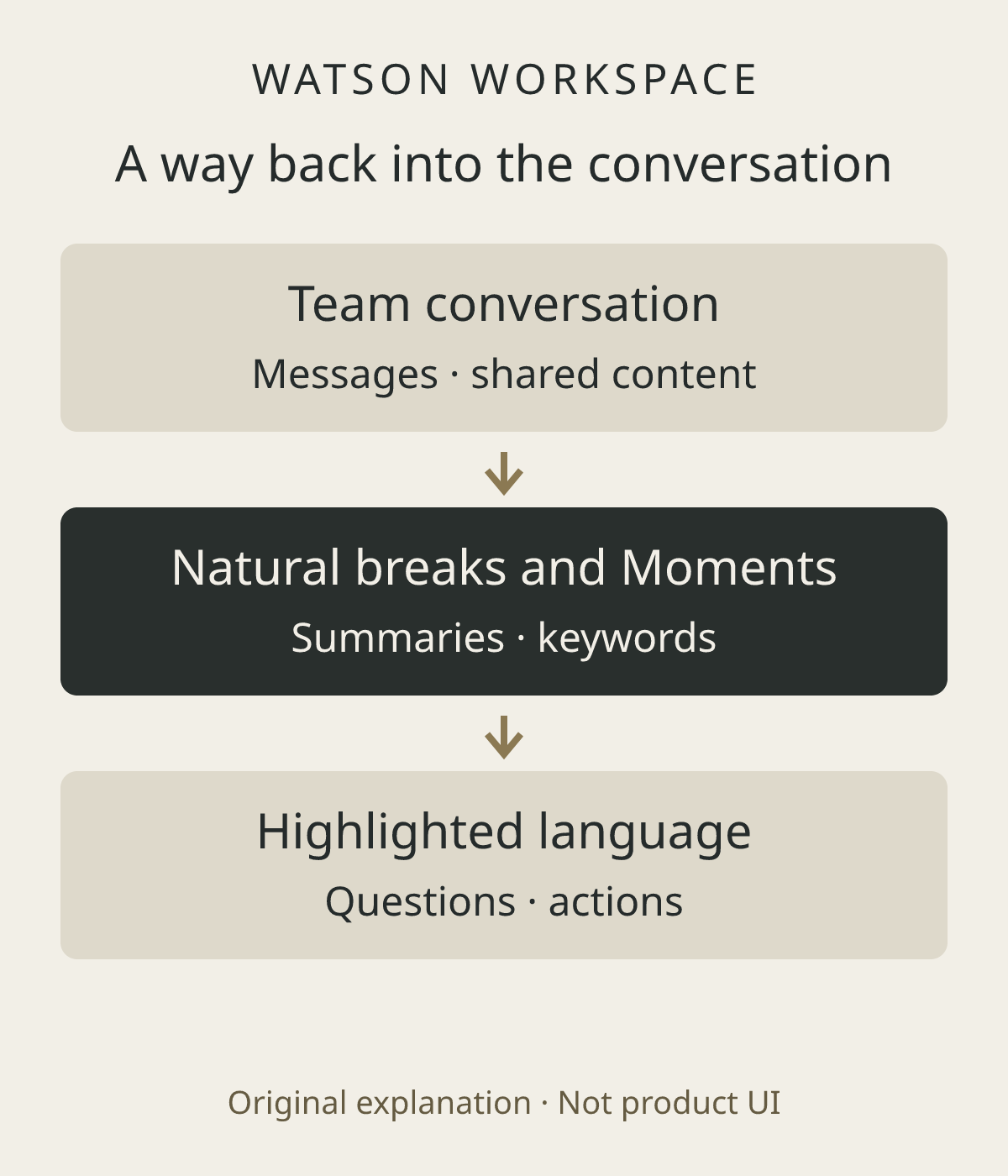
IBM Watson Workspace put a searchable team conversation at the center of its collaboration product. Its 2017 Essentials announcement combined group and one-to-one messages, shared files and connections to third-party tools.
Moments was the distinguishing layer. IBM described Watson recognizing natural breaks in a conversation and turning them into individual summaries. Natural-language processing extracted keywords and highlighted questions and actions. A returning teammate could begin with those summarized topics, then return to the conversation, rather than reread every message in sequence.
This was assistance within an existing team stream. IBM’s description establishes the intended functions; it does not establish how accurately they worked for a particular team.
IBM’s original Essentials announcement.
The Watson Workspace archive distinguishes the closed application from Watson Work Services and other IBM products. Its displayed March 5, 2019 is a dated firsthand closed-by observation, with the actual final day unconfirmed.
EXPO Translation: the vocabulary of one venue
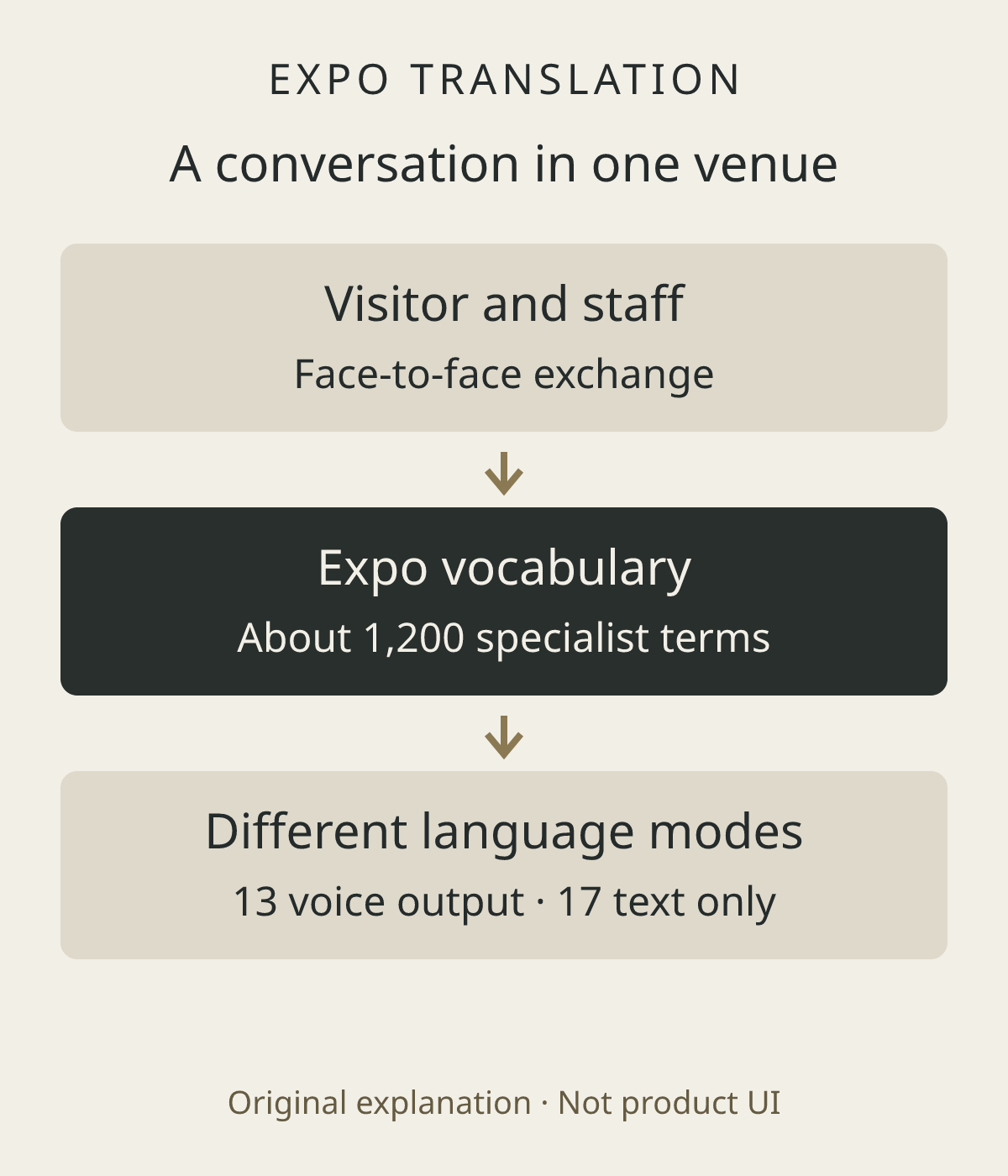
EXPO Translation, introduced as EXPOホンヤク in TOPPAN’s January 2025 release, was built for face-to-face exchanges between Expo visitors and staff. It used a NICT translation engine and included venue-specific vocabulary, including pavilion and place names.
TOPPAN described about 1,200 specialized terms and 30 supported languages overall. Those language modes were not identical: 13 supported voice output, while 17 were text-only. The staff offering added preset phrases, a venue map and announcement playback. This was a translation app whose surrounding context was an exhibition site, including the names a visitor might need when asking for directions.
The original release describes those functions and their intended use. No installation or translation-quality test is claimed here.
TOPPAN’s original app introduction.
The organizer separately confirms that the app ended service on October 13, 2025. The EXPO Translation archive preserves that completed end without extending it to VoiceBiz, NICT technology or separately named Expo interpreting services.
The work that was already there
A manuscript supplied structure and references; a conversation supplied questions and actions; an exhibition supplied a vocabulary. These product descriptions preserve specific approaches to bringing assistance into existing work. The archive pages carry the dates and scope; the stories begin with those interactions.